
Success story: how seQura became the BNPL brand most cited by AIs in Spain
How seQura became the most-cited BNPL brand in Spain across AI answers—ahead of Klarna and PayPal. The two-layer SEO + data strategy behind the results.






When someone asks ChatGPT, Gemini or Perplexity about flexible payment options in Spain, today the answer cites seQura more than any other source in the sector. Over the last 30 days, sequra.com has been the most-cited domain in its entire competitive set across AI answers, ahead of Stripe, Klarna, PayPal or Aplazame, and the brand appears with the best average mention position (2.4) among all monitored BNPL competitors, outperforming even Klarna (2.9).
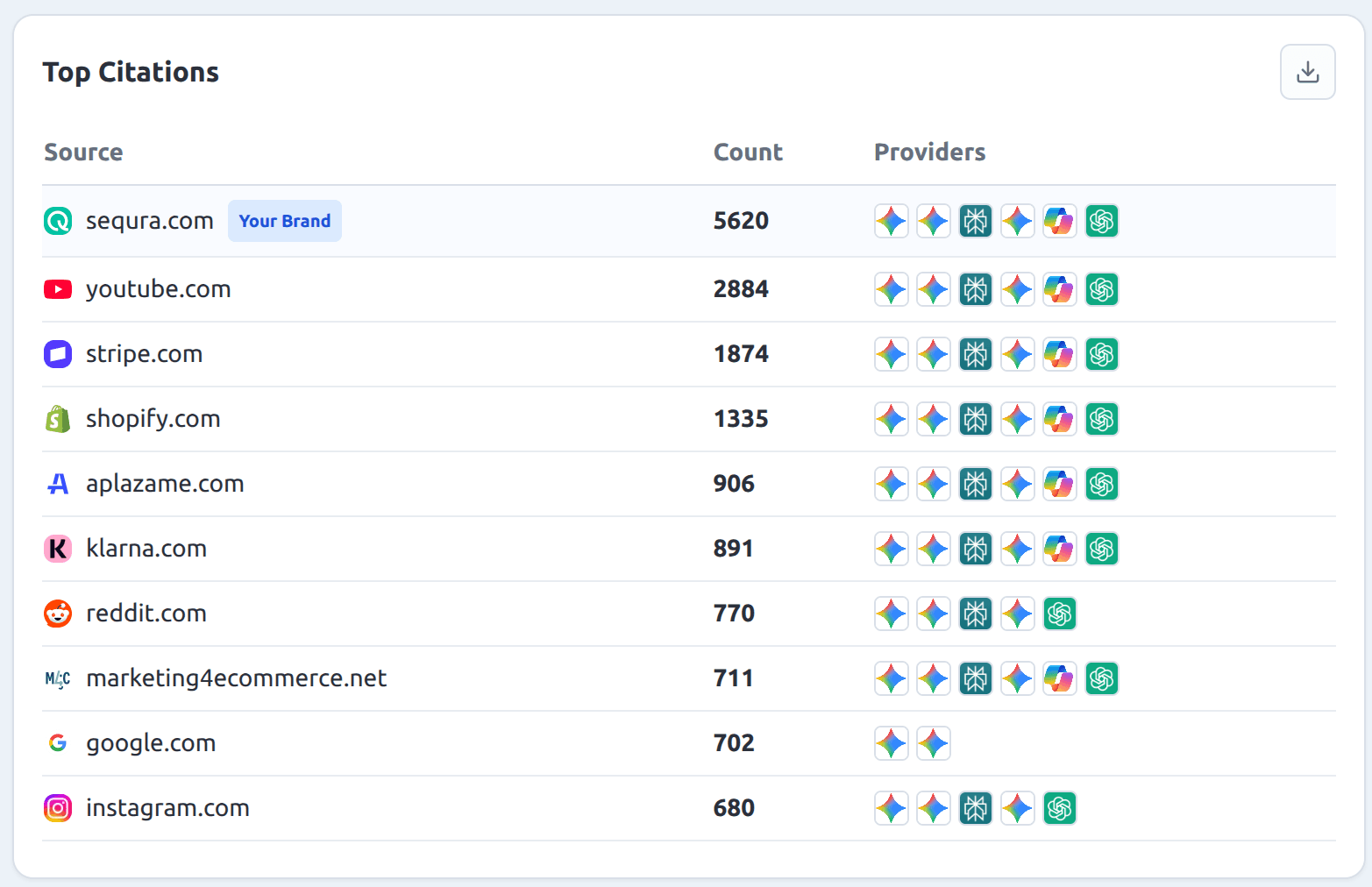
The engine behind this result was not a "GEO" trick, but a two-layer strategy: a solid SEO foundation that ensured the AI crawlers could crawl and interpret the site without friction, and a deliberate editorial bet on becoming the source of comparative data for the BNPL sector, publishing the information that AIs need to cite and that no one else was offering.
The numbers* (GEO Metrics, last 30 days)
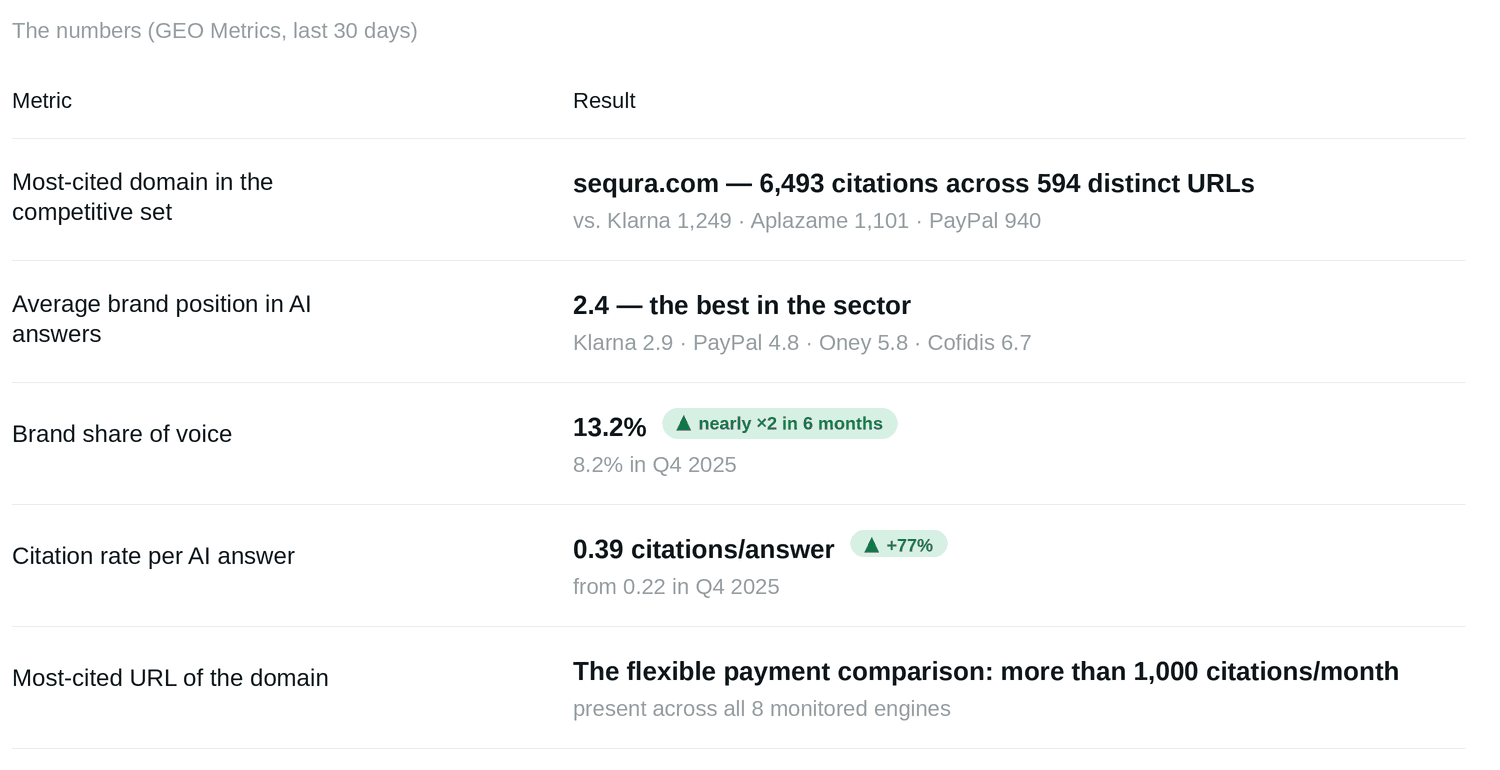
*Measurement: the GEO Metrics project monitors 214 prompts distributed by search intent.
The challenge
seQura competes in the BNPL category against global giants with far greater brand awareness (Klarna, PayPal, Afterpay) and established local players (Aplazame, Oney, Cofidis). With AI assistants emerging as a new gateway to information, and with Google integrating AI Overviews and AI Mode into its results, the question was no longer just "do we rank on Google?", but "do AIs cite us when a user or an e-commerce business asks about flexible payments?".
The risk was twofold: losing visibility to brands with more perceived authority, and being left out of a channel where there is no page 2 — either they cite you in the answer, or you don’t exist.
The strategy
Layer 1 — The foundation: an SEO methodology that already worked
Visibility in AIs does not start from scratch: generative engines rely on the same fundamentals as the search engine. The SEO methodology we had been applying at seQura for some time ensured that, at the crawling and indexing level, the AI crawlers (GPTBot, ClaudeBot, PerplexityBot, Google-Extended...) hit no obstacles: clean architecture, content accessible without depending on JavaScript, structured data, and an already-mature content strategy organized by search intent.
This explains a data point that often goes unnoticed: AIs don’t cite only seQura’s homepage. They cite 594 different URLs from the domain — blog posts, sector category pages (education, travel, technology), FAQs, technical documentation. The whole site is "citable" because the whole site is crawlable and interpretable.
Layer 2 — The bet: becoming the data authority for the BNPL sector
With the foundation secured, the goal shifted to winning active visibility in AIs (and, along the way, in Google). The hypothesis: AIs cite whoever gives them data they can’t find anywhere else. When a model has to answer "what flexible payment options are there in Spain and how do they differ?", it needs a source that genuinely compares — terms, costs, limits, requirements — and that source did not exist.
So we created it. Instead of yet another brand post talking about itself, we published an honest comparison of the flexible payment options in Spain, including competitors, with the data no one else provided:
The comparison in question: https://www.sequra.com/es/post/comparativa-opciones-pago-flexible-espana
The logic is that of "linkbaiting" carried over into the generative world: we don’t chase the citation, we publish the asset that makes citing us inevitable.
And in case they don’t cite us, what we do is generate our own articles in other outlets that end up linking to our BNPL benchmark. Some will say this is new, but to me it looks like good old-fashioned link building 🙂
The results
The comparison: from non-existent to the #1 cited URL of the domain
GEO Metrics data, through citation-domain analysis (which URLs each engine cites and how often), lets us see the before and after with precision:
- Q4 2025 (before): the comparison did not even appear in the top 20 cited URLs of sequra.com.
- March 2026: it was already the #1 cited URL of the domain, with 1,875 citations in a single month (1,427 across Gemini, AI Mode, AI Overviews, Perplexity and Copilot + 448 from ChatGPT).
- Today (last 30 days): it remains #1, with more than 1,000 monthly citations and presence across all 8 monitored engines. Roughly 1 in every 16 AI answers analyzed in the category cites this article.
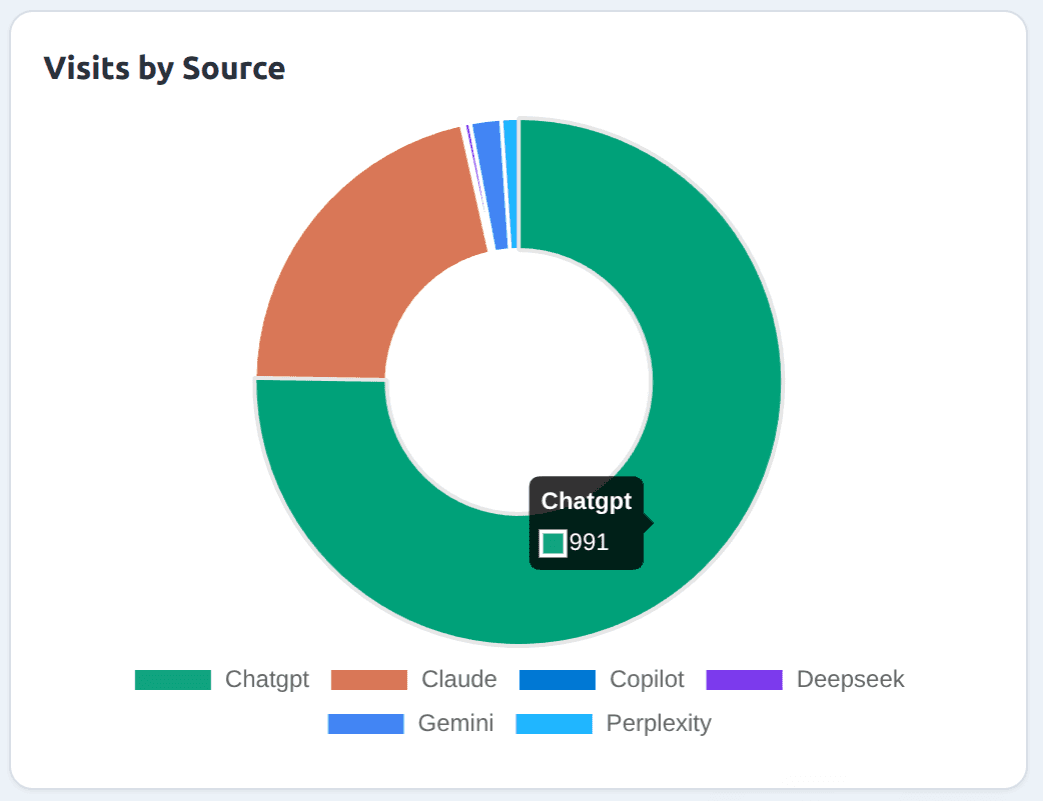
And there is an intended side effect: because ChatGPT citations carry `utm_source=chatgpt.com`, the article doesn’t just generate visibility — it generates measurable traffic and leads from AIs to seQura, and this visibility has become a strong source of inbound business through this channel.
The strategy replicated in other markets
Once the hypothesis was validated in Spain, we replicated the same format in seQura’s other markets, with the same result:
- Italy: the BNPL providers comparison is the #2 most-cited URL of the domain (246 citations/month).
- Portugal: the BNPL solutions comparison is #5 (168 citations/month).
Three markets, three comparisons, three citation assets at work. It wasn’t luck: it’s methodology.
The brand, ahead of Klarna in the answers
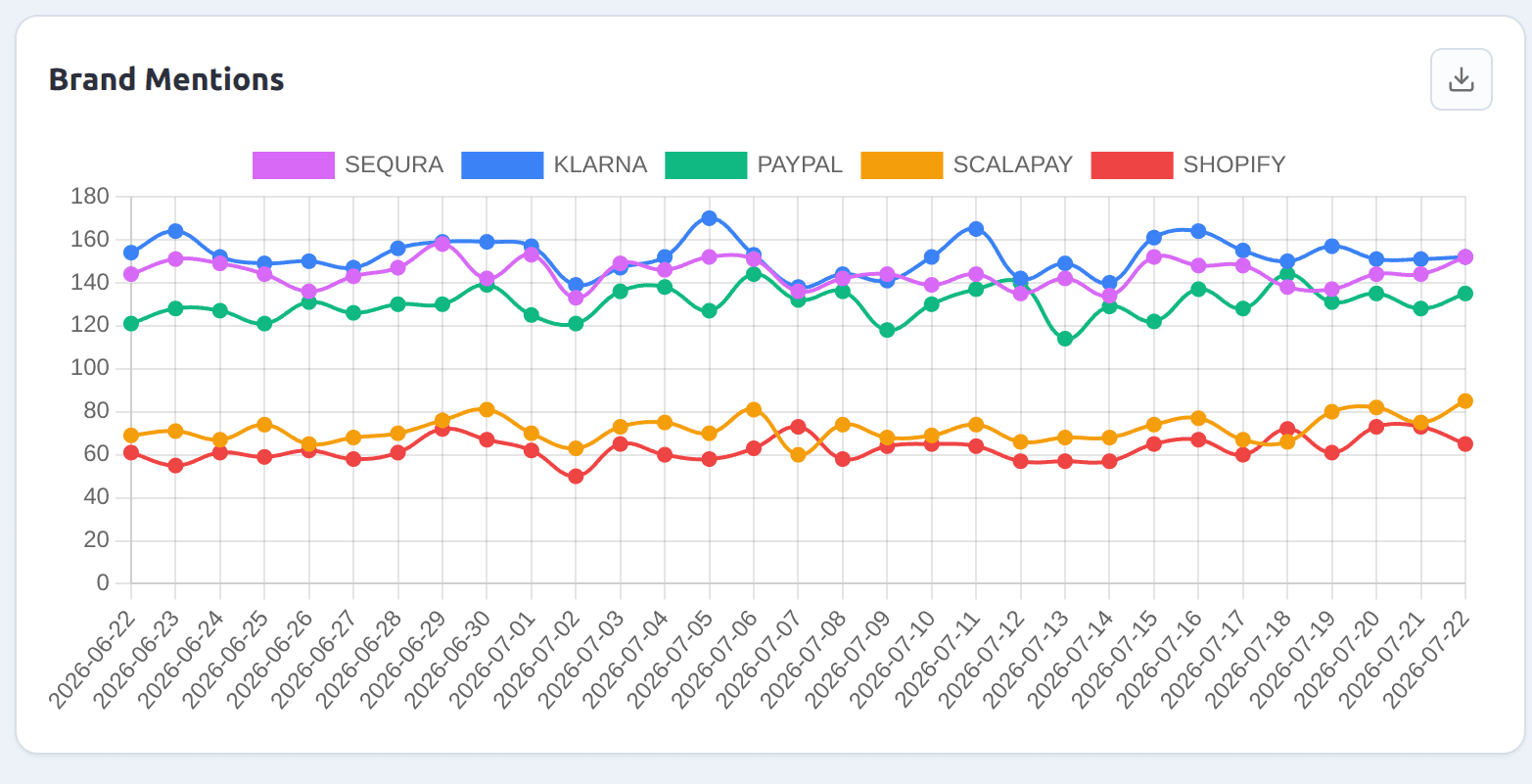
At the brand level (not just the domain), GEO Metrics’ competitor benchmarking shows that when AIs list flexible payment options, seQura appears on average in position 2.4 — better than Klarna (2.9) and well ahead of PayPal (4.8), Oney (5.8) or Cofidis (6.7). The brand’s share of voice in the answers has risen from 8.2% to 16.2% in six months.
And citation efficiency — how many times sequra.com is cited per generated answer — has grown 122% over the same period (from 0.22 to 0.49 citations per answer), indicating that the growth does not depend on the volume of questions, but on AIs choosing seQura as a source more and more often.
Learnings
SEO is not dead: it is the entry requirement. Without crawlability and interpretable content, no AI-visibility strategy gets off the ground. seQura’s 594 cited URLs are the direct consequence of years of well-executed technical groundwork.
AIs cite data, not marketing. The content that won the category was a comparison that included the competition. Providing the data others don’t is the fastest way to become the reference source.
What works in one market can be replicated. The same format worked in Spain, Italy and Portugal. Visibility in AIs responds to methodology, not to chance.
Without measurement there is no strategy. GEO Metrics (214 prompts, 8 engines, 5 countries) is what makes it possible to move from intuition ("I think ChatGPT mentions us") to management ("our comparison is losing citations in Perplexity this month; let’s update the data"). If you want to try GEO Metrics with your own brand, you can start here.
---
*Data: GEO Metrics platform, seQura project, analysis windows Q4 2025 to July 2026. Last 30 days: 16,644 AI answers analyzed across 214 prompts on 8 engines.*
GEO & AEO expert focused on making brands visible inside AI-generated answers. He leads GEO Metrics, measuring how models like ChatGPT and Gemini cite, rank, and describe brands. His work helps companies move from SEO rankings to true visibility in AI-driven search.
See more articles
Learn actionable strategies, proven workflows, and expert tips to help your brand thrive.




Subscribe to GEO Metrics newsletter!
Receive expert advice, updates, and smart analytical insights directly in your inbox.